


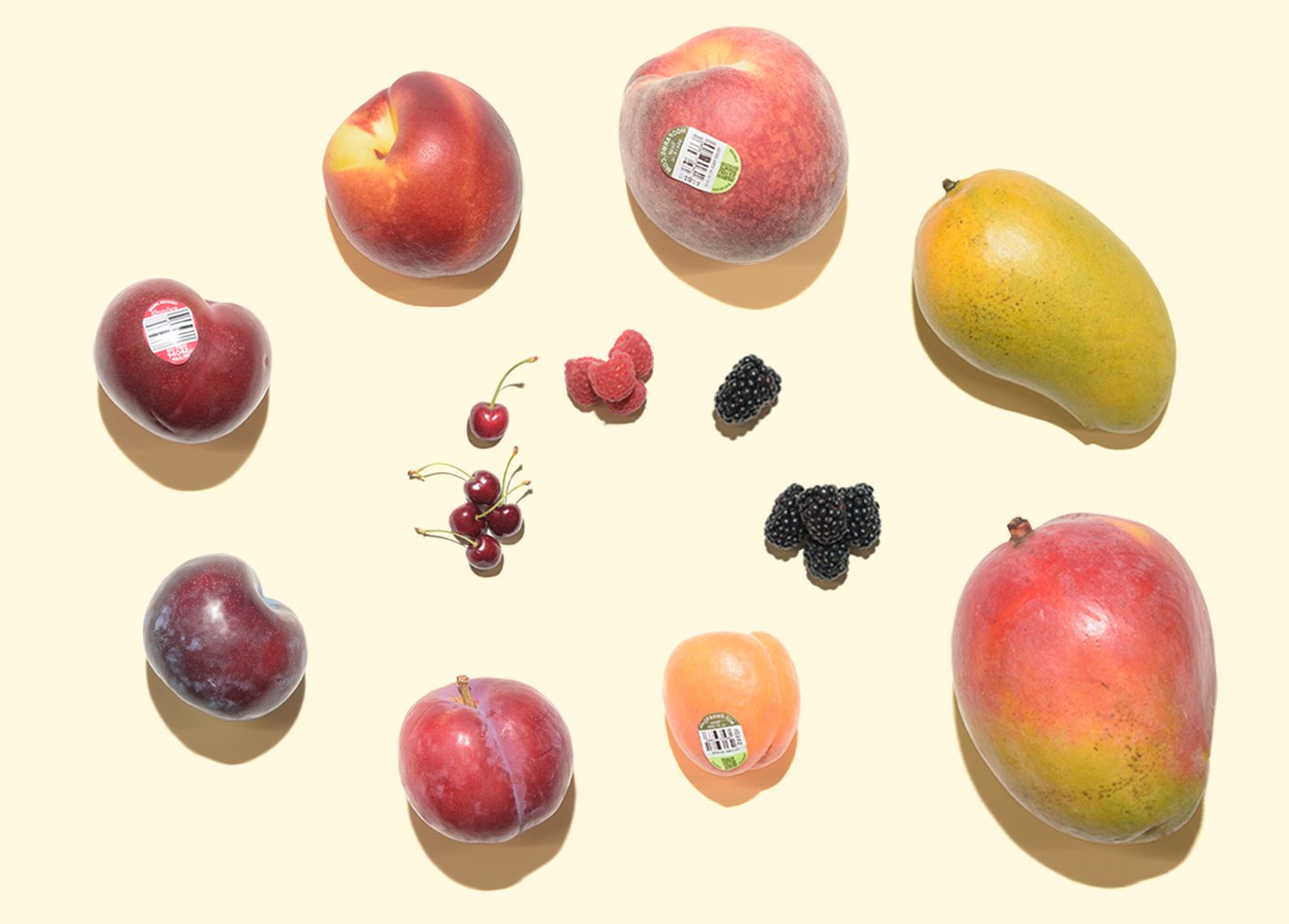
Stone fruit season is the Co-op’s true sign of summer. Usually around June, stone fruits start trickling in and taking over our produce section. The name “stone fruit” refers to fruits with a pit or “stone” in the center. Your first thought is probably peaches, plums, or cherries; however, there are some sneaky stone fruits like raspberries, blackberries, and even mangoes that fall into this category. Raspberries and blackberries are just clusters of fruit around a pit, granting them access to the Stone Fruit Club. There genuinely is a stone fruit for everyone, and we surprised ourselves putting this together! Read on to find your favorite!
Peaches
WHAT ARE THEY?
Peaches are arguably the most popular stone fruit. They’re rich in antioxidants such as Vitamin A & C, and prized for their juiciness.
HOW DO THEY TASTE?
They’re juicy and sweet, surrounded by a fuzzy thin skin.
HOW CAN I EAT THEM?
Pick one up and give it a whiff next time you’re in Produce at your co-op! It should smell sweet and floral. Once you bring them home, peaches are perfect to just take a bite and snack on, incorporate into a sweet treat, or even to throw on the grill! If you’re searching for a sweet-and-savory pairing, they go beautifully with tomatoes in a salad.
TIP: If you need them to ripen up quickly, make sure to grab a paper bag from our Produce section, and leave them inside on your counter! Once they’re ripe, they store nicely in your fridge. This same trick goes for avocados, too!
Nectarines
WHAT ARE THEY?
Nectarines are essentially fuzz-free peaches. They have a smooth, shiny skin and are slightly smaller and firmer than their fuzzy counterparts.
WHAT DO THEY TASTE LIKE?
Nectarines take on a more aromatic taste with notes of honey, whereas peaches have a more complex, almost acidic taste.
HOW CAN I EAT THEM?
Bite into it and enjoy them as they are, or slice it around the seam and toss them into your next dish! They’re similarly versatile to peaches.
Plums
WHAT ARE THEY?
Plums are a smaller stone fruit, in a wide range of colors. You can pretty regularly find red and black at our co-op.
HOW DO THEY TASTE?
They have a sweet-tart flavor, and are incredibly juicy.
HOW CAN I EAT THEM?
If you choose to enjoy them raw, be sure you have a napkin nearby. They also work great in desserts, and play nice with warm aromatics like cardamom or ginger.
Cherries
WHAT IS IT?
Cherries are one of the first stone fruits to hit the sales floor in early Summer.
WHAT DOES IT TASTE LIKE?
Leeks taste like a milder, smoother, and sweeter version of a standard onion or green onion. They offer a delicate, slightly buttery, and earthy onion flavor that is much less sharp or pungent than their traditional onion relatives.
HOW CAN I EAT IT?
Cherries are perfect for snacking. Throw a mix of cherries and berries in your pack for a picnic, or incorporate them into something sweet. If you’re a midnight snacker, consider making cherries your go-to; they’re naturally rich in melatonin.
Apricots
WHAT ARE THEY?
Apricots are a small, yellow-orange stone fruit with a slightly fuzzy skin and soft flesh. They’re one of very few fruits high in iron, and fiber-rich.
WHAT DOES IT TASTE LIKE?
Apricots are tart, but creamy. Sometimes described as tasting like a cross between a peach and a plum, but are much less juicy than either.
HOW CAN I EAT THEM?
They shine when cooked with. They’re popular for jam or drying, perfect for baking, and also great raw.
Pluots
WHAT ARE THEY?
A pluot is a cross between a plum and an apricot. This hybrid family includes pluots, plumcots, and apriums, but at our co-op, it is most common to see pluots on the sales floor. These three hybrids are all varying combinations of plums and apricots. You can think of a pluot as 75% plum, 25% apricot.
WHAT DO THEY TASTE LIKE?
Pluots are known for their intense sweetness. They’re like a plum without the tart edge, as they have a lower acidity.
HOW CAN I EAT THEM?
They’re best eaten fresh and raw. If they end up over-ripe, sauté them with cinnamon and pour the jammy mixture over ice cream or greek yogurt.
Mangoes
WHAT ARE THEY?
Mangoes are a sweet-tropical stone fruit, that differ quite a bit from peaches and plums. Mangoes have an outer skin and a creamy flesh, and a flat center stone. They are packed with vitamins, minerals and antioxidants.
WHAT DO THEY TASTE LIKE?
At your co-op, we carry several varieties of mangoes throughout the stone fruit season. You can learn about each of them on this blog we posted last summer.
HOW CAN I EAT THEM?
Slice the fruit away from the pit and peel the skin away. It’s mellow sweetness can provide balance for sour, salty, or spicy flavors; or, you can enjoy it on its own!
Raspberries
WHAT ARE THEY?
Raspberries are sweet-tart stone fruits that present themselves as berries. Stone fruits are typically thin-skinned fruits that contain a single a stone or pit in the middle of their often fleshy fruit. Raspberries and blackberries slightly differ, as they’re clusters of tiny fruits and stones.
WHAT DO THEY TASTE LIKE?
Raspberries have a bright, sharp sourness and a slightly floral undertone.
HOW CAN I EAT THEM?
Raspberries are extremely versatile and stand up to pairings like dark chocolate or other decadent desserts. They’re a great addition to a yogurt bowl, a fun compote to throw in the bottom of your coffee or matcha, or you can enjoy them as a stand-alone-snack.
Blackberries
WHAT ARE THEY?
Like raspberries, blackberries are a sneaky stone fruit. They often get mistaken for berries, which is valid, its in the name. Those tiny seeds that get stuck in your teeth (the same as raspberries) are what make them stone fruit.
WHAT DO THEY TASTE LIKE?
Ripe blackberries are juicy and plump, and have a deep sweetness and slight tartness.
HOW CAN I EAT THEM?
Blackberries are beautiful on their own, but they also play nice with others. Their deep sweetness compliments citrus, warm spices like vanilla or ginger, and savory elements like sage or goat cheese.