


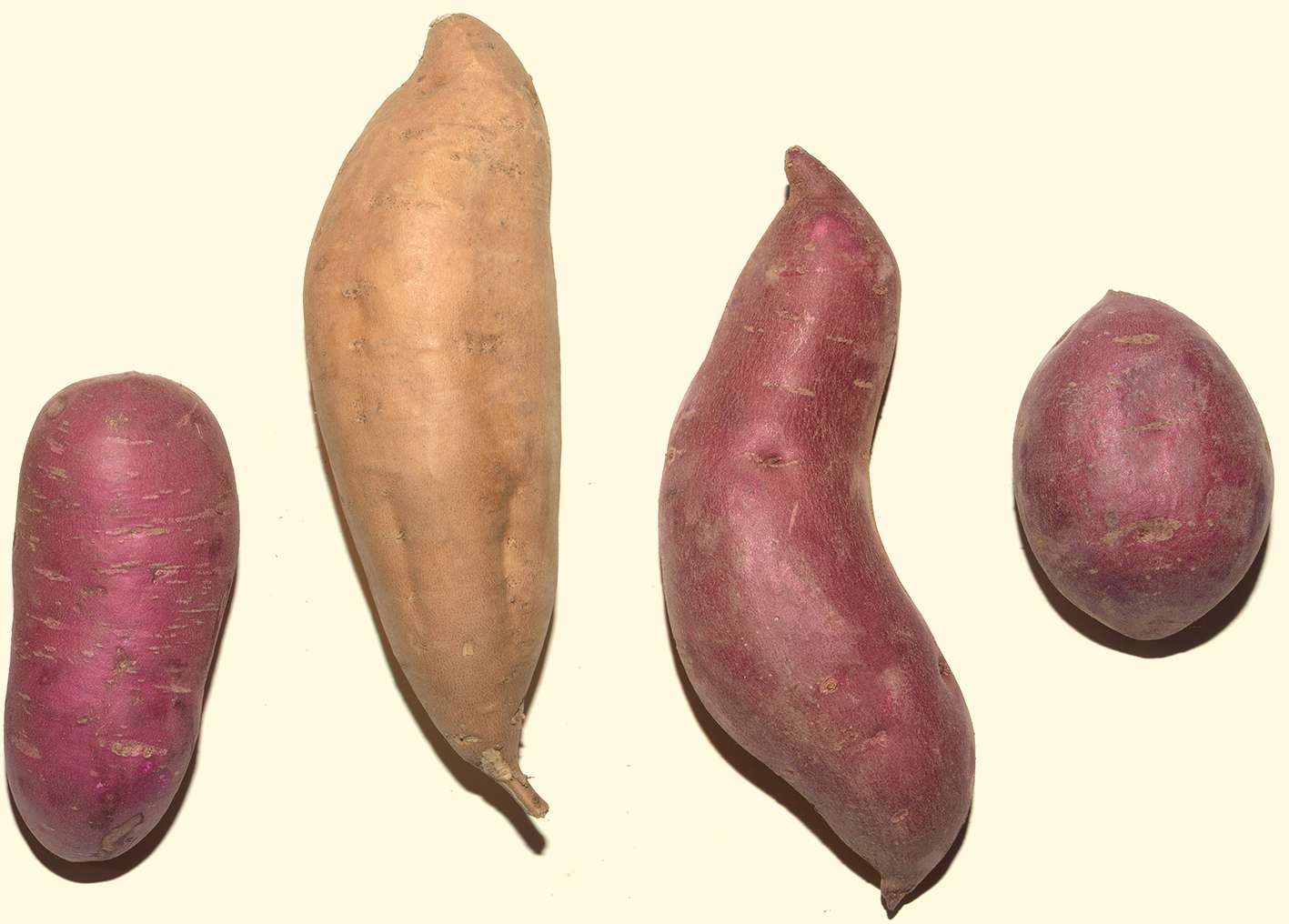
At Breadroot Co-op, our sweet potato selection goes well beyond the basics. From common garnets to vivid colored purple types, and each one brings something different to the table.
They might not look all that different in the bin, but once you start cooking, the contrast is clear. Some bake up silky and sweet, others stay hearty and structured, and a few deliver that dense, almost dessert-like richness.
Sweet potatoes are one of the most versatile staples to keep on hand. Getting to know each variety makes it easier (and more fun) to cook with intention, so here’s your guide to what sets these sweet spuds apart.
Garnet Yams (or Beauregard or Jewel)
WHAT ARE THEY?
Despite the name, these aren’t true yams—they’re one of the most common varieties of sweet potato in the U.S. They have a reddish-brown to maroon skin and a deep orange interior. Thanks to their high moisture and sugar content, they become incredibly soft and almost creamy when cooked.
HOW DO THEY TASTE?
Sweet, earthy, and classic—what most people expect when they think “sweet potato.”
HOW CAN I EAT THEM?
Best for baking, but super versatile in both sweet and savory dishes; think casseroles, mash, or roasted sides.
Japanese Sweet Potato
WHAT ARE THEY?
Japanese sweet potatoes have a purplish-red skin and a pale yellow flesh. They’re dense and starchy, but become fluffy when cooked. Japanese sweet potatoes offer a drier texture than other sweet potato varieties.
HOW DO THEY TASTE?
Japanese Sweet Potatoes have a nutty and rich flavor, often compared to a chesnut.
HOW CAN I EAT THEM?
Japanese Sweet Potatoes are best for cooked, roasted, baked, boiled, stir-fried, or steamed. They’re drier, so they’re great paired with vegetables and sauces.
Purple Sweet Potato
WHAT IS IT?
Purple Sweet Potatoes, unlike the Japanese sweet Ppotatoes, have flesh that matches their skin. What sets these apart from other sweet potatoes is their anthocyanin content, a compound that provides many plants with their natural red, purple, and blue coloring (the same as cherries, grapes or strawberries!).
WHAT DOES IT TASTE LIKE?
While the taste is similar to Japanese sweet potatoes, they’re generally less sugary, with a more muted, earthy, or even wine-like flavor. Their texture is firmer, drier, and starchier.
HOW CAN I EAT IT?
Best for roasting or baking to show off the incredible color. Purple potato pie, purees, or an eye catching additions to salad!
Jersey Sweet Potato
WHAT ARE THEY?
The Jersey is an “old fashioned” sweet potato, they have a golden-yellow skin with a light creamy flesh.
WHAT DO THEY TASTE LIKE?
These are best known for their dense, crumbly, and mildly sweet flavor, and are a less-sweet alternative to orange varieties.
HOW CAN I EAT THEM?
Jerseys stay firm even after they’re cooked, so they’re best roasted whole, mashed with butter, cut into fries, or used in casserole.